
By the Clinical Team at Smile Dental Center — Last updated: March 2026
Every year, more than 1.4 million Americans cross the border or board a plane specifically for dental care. Some save $5,000 on a single procedure. Others have great experiences — and a smaller number run into complications. So what separates a successful dental trip from a disaster? And is dental tourism actually safe?
As a dental group with offices in both Miami, FL and Medellín, Colombia, we sit at a unique intersection: we’ve seen what works, what doesn’t, and why patients who research carefully almost always come home smiling.
- Dental tourism is safe when you vet the clinic, verify credentials, and plan follow-up care.
- Medellín, Colombia is one of the top-rated dental tourism destinations in the world for US patients.
- The biggest risks are not the procedures themselves — they’re choosing the wrong provider or skipping aftercare.
- Same-team continuity (your Miami dentist also works in Medellín) eliminates the “stranger clinic” risk entirely.
- Savings of 50–70% on procedures like veneers and implants are realistic at reputable international clinics.
What Is Dental Tourism — and Why Is It Growing?
Dental tourism means traveling to another country primarily to receive dental treatment, combining care with the experience of visiting a new destination. It isn’t a new concept — patients from the US, UK, and Canada have traveled to Mexico, Costa Rica, Hungary, and Colombia for decades.
What’s changed in 2026 is the quality and accessibility of information. Patients can now research clinics in depth, read verified reviews, video-consult with dentists before they travel, and find clinics that maintain international accreditation standards. The gap between a top clinic in Medellín and one in Miami is far smaller in terms of technology than the gap in price.
According to the American Dental Association (ADA), cost is the number-one barrier to dental care in the United States. A full set of porcelain veneers that costs $8,500–$9,500 in Miami can cost $2,000–$2,800 in Medellín — a saving that more than covers flights and hotel, often with money left over.
Is Dental Tourism Safe? The Honest Answer
The honest answer is: it depends entirely on where you go and how carefully you choose.
The procedures themselves — veneers, implants, crowns, cleanings — are the same everywhere. A dental implant placed in Medellín uses the same titanium post, the same osseointegration process, and the same bone biology as one placed in Miami. The risk isn’t the treatment. The risk is the provider.
Over 500+ international patients treated at our Medellín clinic have undergone procedures ranging from composite veneers to full All-on-X implant arches — and the outcomes, when measured against our Miami clinic’s standards, are consistently comparable. We use the same protocols, the same material brands, and in many cases the same clinical team in both countries.
When Dental Tourism Goes Wrong
Complications in dental tourism most commonly occur when:
- Patients choose based on price alone — the cheapest clinic isn’t always (or even often) the best value.
- No follow-up plan exists — a crown placed abroad that fails after returning home may be difficult and expensive to fix locally.
- The clinic isn’t properly credentialed — not all international clinics meet the sterilization and safety standards patients expect.
- Language barriers create miscommunication — treatment plans get lost in translation, leading to unmet expectations.
- Rushed timelines — patients cram too many procedures into one short trip, leaving insufficient healing time.
These risks are real — but every single one is preventable with proper vetting and planning.
Dental Tourism Risks: What to Watch For
Understanding the real risks of dental tourism means separating procedure risks from provider risks.
1. Infection Control and Sterilization
This is the most serious safety concern — and one that varies enormously by clinic. Look for clinics that follow ISO 9001 or similar accreditation standards. Ask directly: what sterilization protocol do you use? How is your equipment maintained? A reputable clinic will answer these questions transparently.
2. Material Quality
Some budget clinics cut costs by using lower-grade materials — acrylic where zirconia should be used, or composite resin instead of E-max porcelain. Ask specifically what brand and grade of material will be used, and get it in writing in your treatment plan.
3. Post-Treatment Complications
Any dental procedure carries a risk of complications. Abroad, the challenge is: who do you call if something goes wrong after you fly home? Clinics with US-based partner offices — or those that provide direct follow-up support via telehealth — dramatically reduce this risk.
4. Unrealistic Timelines
Some procedures require time. Dental implants, for example, need 3–6 months of osseointegration before the final crown is placed. Clinics that promise a full implant arch in 5 days are cutting corners. Be wary of any timeline that seems too fast.
Dental Tourism Tips: How to Choose a Safe Clinic
The ADA’s guidance on dental tourism recommends verifying credentials, asking about materials, and planning for follow-up care at home. Here’s how to apply that in practice:
Before You Book
- Verify credentials — Confirm the dentist is licensed in their country. In Colombia, this means registration with the Colombian Ministry of Health (Ministerio de Salud).
- Request a video consultation first — Any reputable clinic will do this. It lets you assess communication, professionalism, and whether you trust the provider.
- Ask for a detailed written treatment plan — Including materials, brands, number of appointments, and what happens if adjustments are needed.
- Read reviews from your country — Look specifically for reviews from US or Canadian patients, not just local reviews.
- Ask about follow-up support — Does the clinic have a way to support you after you return home?
Questions to Ask the Clinic
- Are your dentists licensed and registered with the national health authority?
- What materials and brands do you use?
- What is your sterilization protocol?
- How do you handle complications after the patient returns home?
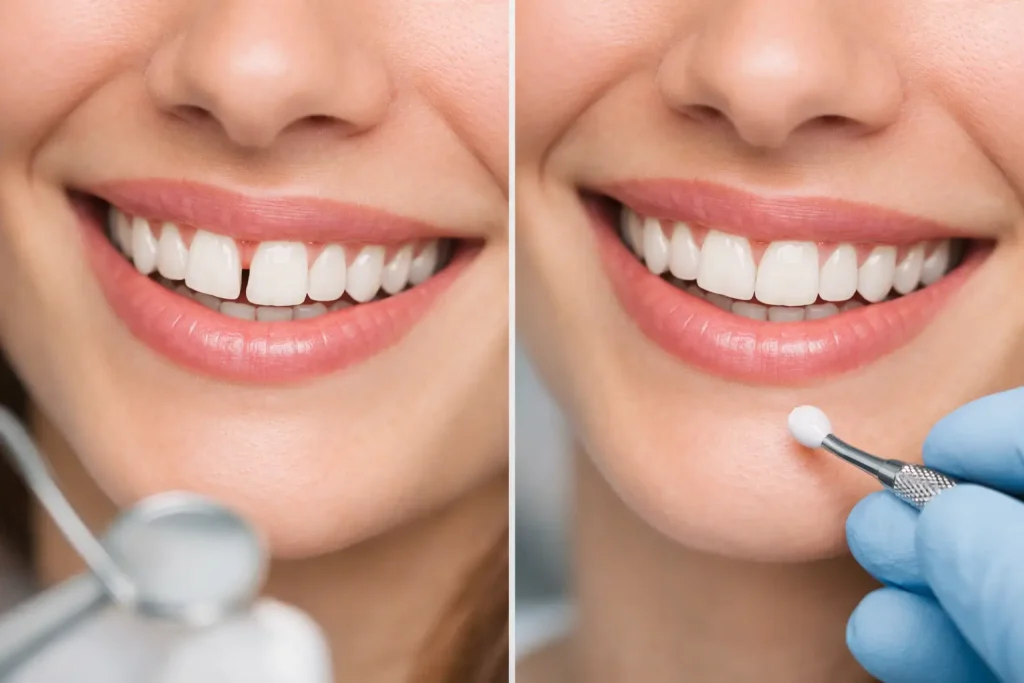
- Can I see before-and-after photos of similar cases?
Is Dental Tourism in Colombia Safe?
Colombia — and Medellín in particular — has become one of the premier dental tourism destinations for North American patients. The reasons are compelling:
- World-class dental schools — Colombia has some of Latin America’s most respected dental education institutions.
- Strong regulation — Colombian dentists are licensed and regulated by national health authorities.
- Significantly lower costs — Composite veneers start at $900 vs. $4,000–$5,500 in Miami. Porcelain veneers start at $2,000–$2,800 vs. $8,500–$9,500.
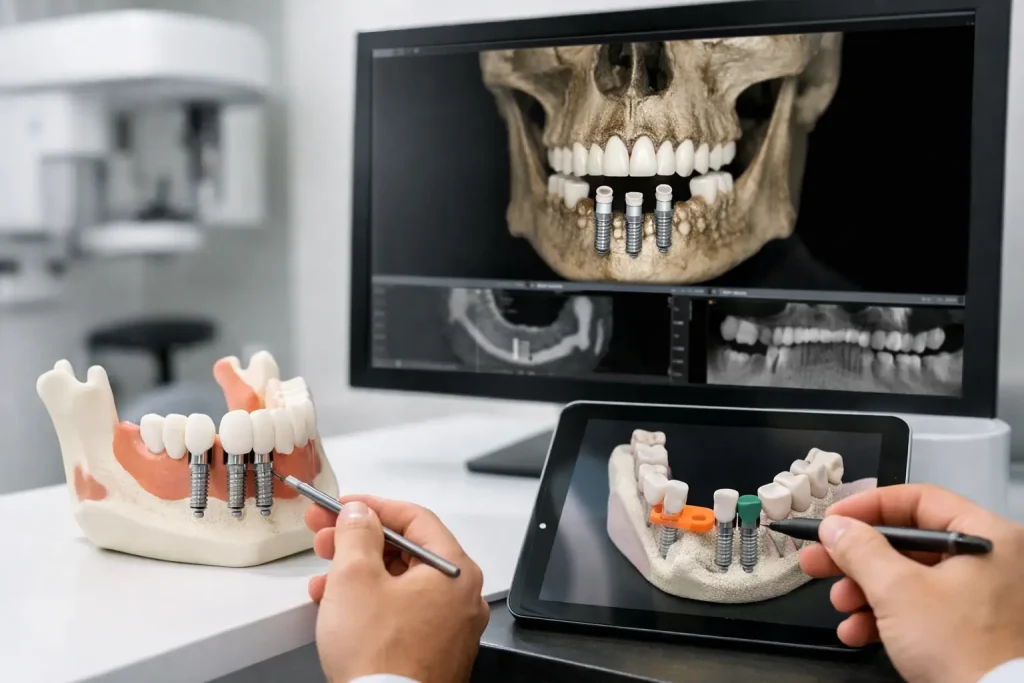
- Modern facilities — Leading Medellín clinics use the same digital smile design software, 3D CBCT imaging, and CAD/CAM technology as top US practices.
- English-speaking staff — Reputable clinics in Medellín catering to US patients have bilingual teams.
Our dental tourism in Medellín program was specifically designed with US patients in mind. Patients consult with our Miami team first, then travel to our El Poblado clinic in Medellín — where they’re treated by the same clinical team under identical protocols. This eliminates the “stranger clinic” risk that makes dental tourism genuinely dangerous.
The SDC Advantage: Same Team, Two Countries
Most dental tourism involves choosing a clinic you’ve never interacted with, in a country you’ve never visited, for care you can’t easily follow up on at home. That’s the real source of risk — not the country, not the procedure.
Smile Dental Center removes that variable entirely. Our patients consult with us in Miami, we plan their treatment here, and when they travel to Medellín, they’re seeing the same team that already knows their case. When they return to Miami, we provide all follow-up care. There’s no handoff to a stranger. There’s no gap in communication. The same clinical standards apply at both locations.
If you’re considering composite veneers or porcelain veneers and want to explore whether doing them abroad makes sense for your situation, that conversation starts with a consultation — not a booking.
Red Flags to Avoid
Avoid any clinic that:
- Won’t provide a video consultation before booking
- Can’t name the specific materials they use
- Doesn’t have a clear follow-up protocol for international patients
- Promises results that seem too fast (full implants in 2 days, etc.)
- Has only local-language reviews with no international patient testimonials
- Doesn’t provide written treatment plans
- Pressure-sells or requires full payment upfront before any consultation
What to Pack for a Dental Tourism Trip
Practical preparation matters. When traveling for dental care, bring:
- Full dental records and recent X-rays from your home dentist
- A list of all current medications (some affect healing or anesthesia)
- Your insurance card (some procedures may qualify for partial reimbursement)
- A soft-food travel kit for the days after major procedures
- The clinic’s emergency contact information
- Travel insurance that includes medical coverage
Frequently Asked Questions
1. Is dental tourism safe?
Yes — dental tourism is safe when you choose a clinic with verifiable credentials, licensed specialists, transparent materials, and a clear follow-up protocol. The procedures are identical to those performed in the US. The variable is the provider, not the country. Vet carefully, consult before booking, and ensure follow-up care is arranged.
2. What are the risks of dental tourism?
The primary risks include variable sterilization standards at unvetted clinics, use of lower-grade materials, complications after returning home with no local follow-up provider, and rushed treatment timelines. These risks are significantly reduced by choosing a clinic with international patient experience, accreditation, and a US-based partner or telehealth follow-up option.
3. How do I find a safe dental clinic abroad?
Start by requesting a video consultation — reputable clinics offer this readily. Verify the dentist’s license with the national health authority. Ask specifically about materials, sterilization protocols, and what happens if you need follow-up care after returning home. Prioritize clinics with documented international patient experience and transparent written treatment plans.
4. Is dental tourism in Colombia safe?
Colombia — particularly Medellín — is one of the safest dental tourism destinations for US patients. Colombian dentists are nationally licensed, leading clinics use modern technology comparable to US practices, and costs are 50–70% lower. Medellín’s El Poblado neighborhood has established itself as a hub for medical and dental tourism with English-speaking, internationally trained teams.
5. What should I bring to a dental tourism appointment?
Bring your most recent dental X-rays and records, a full list of medications, your passport, travel insurance documentation, and the clinic’s emergency contact details. For procedures requiring recovery, pack a soft-food kit and any prescribed medications. Confirm with the clinic what post-procedure items you may need that aren’t available in your home country.
Ready to explore your options? Our team is available to consult with you in Miami or help you plan a dental visit to our Medellín clinic. Message us on WhatsApp: +1 (786) 560-7567 — no commitment required.