

Teeth whitening at home vs dentist is one of the most common questions patients ask before committing to a brighter smile. Professional in-office whitening delivers 6-8 shades of improvement in a single one-hour session using medical-grade peroxide gels and LED acceleration, while at-home methods like strips, trays, and LED kits typically achieve 2-4 shades over several weeks with lower-concentration formulas. The best choice depends on your budget, timeline, sensitivity concerns, and how dramatic a result you want.
Key Takeaways
- Professional whitening uses 25-40% hydrogen peroxide vs 6-10% in store-bought kits, delivering faster and more even results.
- In-office treatments like Philips Zoom can lighten teeth 6-8 shades in about 60 minutes.
- At-home strips and trays cost $20-$300 but take 2-6 weeks to show noticeable improvement.
- Tooth sensitivity is the most common side effect of both methods, though dentist-supervised whitening allows for better management.
- Whitening results last 6-24 months depending on diet, oral hygiene, and tobacco use.
Home vs. Professional Teeth Whitening: The Quick Answer
If you want the short version: professional whitening wins on speed, consistency, and total shade improvement. At-home whitening wins on upfront cost and convenience. But the gap between them is wider than most people realize.
Professional teeth whitening in Miami uses concentrated hydrogen peroxide gels (25-40%) activated by specialized LED or laser light. Your dentist controls the application precisely, protecting gums and soft tissue with a rubber dam while ensuring even coverage across every tooth. The result is a uniform, dramatic improvement in one visit.
At-home products, on the other hand, use diluted formulas that work gradually. They can produce meaningful results over time, but they come with limitations in terms of evenness, speed, and how many shades you can realistically gain.
At-Home Whitening Methods Explained
The consumer whitening market offers several categories of products, each with different active ingredients, application methods, and expected results.
Whitening Strips
The most popular at-home option. Brands like Crest 3D Whitestrips use thin, flexible strips coated with 6-10% hydrogen peroxide gel. You apply them for 30 minutes daily over 10-20 days. Pros: affordable ($25-$55), easy to use, widely available. Cons: uneven coverage on crooked teeth, can irritate gums if strips shift, limited to 2-4 shades of improvement.
Custom-Fit Whitening Trays
Dentist-dispensed take-home trays are a middle ground. Your dentist takes impressions, fabricates custom trays, and provides professional-grade gel (10-15% carbamide peroxide). You wear the trays 30-60 minutes daily for 1-2 weeks. Cost ranges from $250-$500. These deliver better, more even results than strips because the tray holds gel uniformly against every tooth surface.
LED Whitening Kits
Consumer LED kits ($50-$200) pair a gel with a small LED mouthpiece. Marketing claims the light “accelerates” whitening, but the scientific evidence for consumer-grade LED devices is mixed. The blue light in these kits is far weaker than the professional Zoom lamp and may contribute minimal additional whitening beyond what the gel alone achieves.
Whitening Toothpaste
These contain mild abrasives (silica, baking soda) and low concentrations of peroxide or blue covarine for a temporary optical effect. They can remove surface stains from coffee or tea but do not change the intrinsic color of tooth enamel. Think of them as maintenance, not treatment.

Professional In-Office Whitening: How It Works
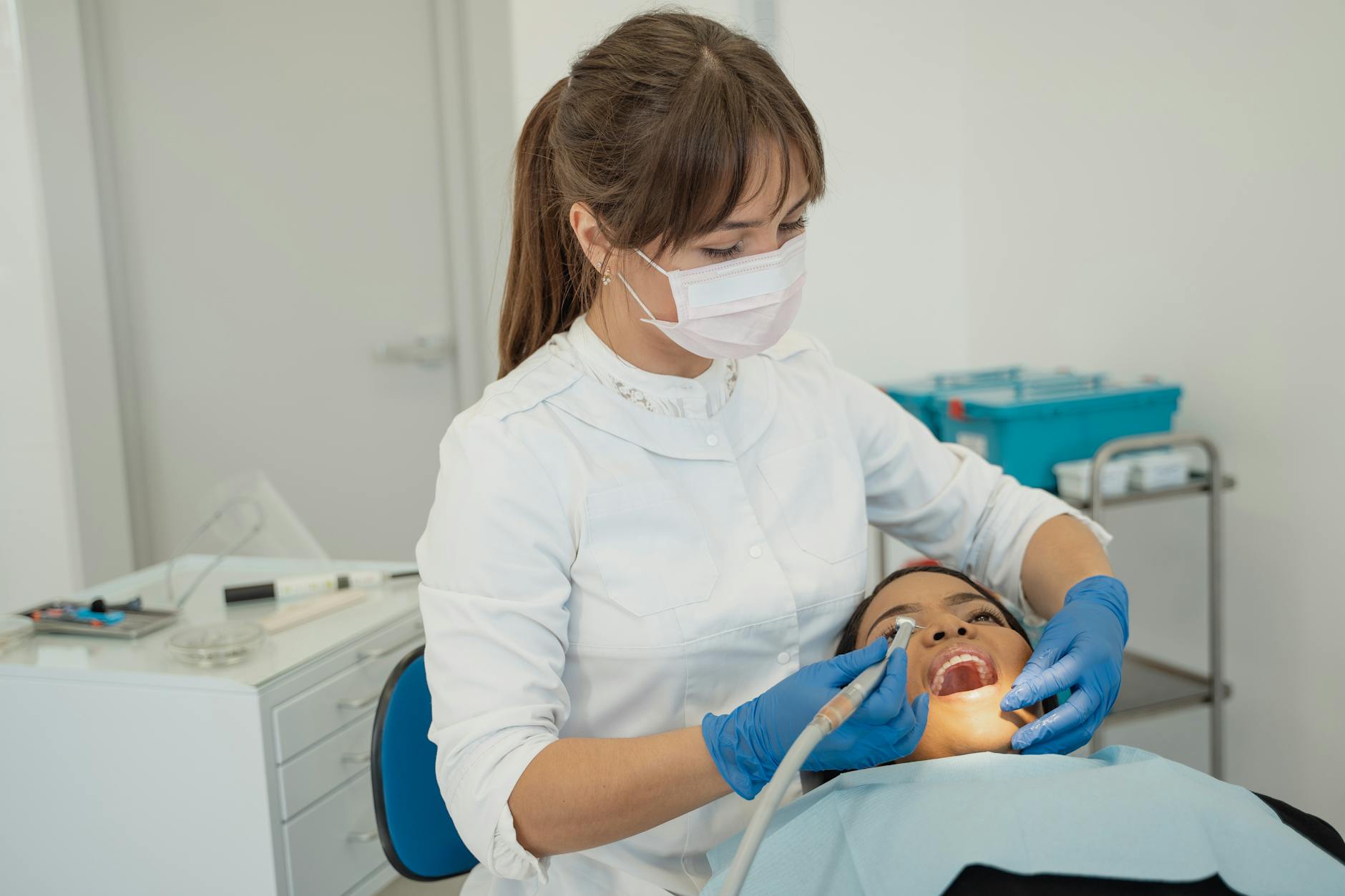
Professional whitening at a dental clinic follows a controlled, multi-step protocol designed for maximum results with minimum sensitivity:
- Dental examination — Your dentist checks for cavities, cracks, gum disease, and existing restorations (crowns, veneers, fillings) that will not respond to bleaching.
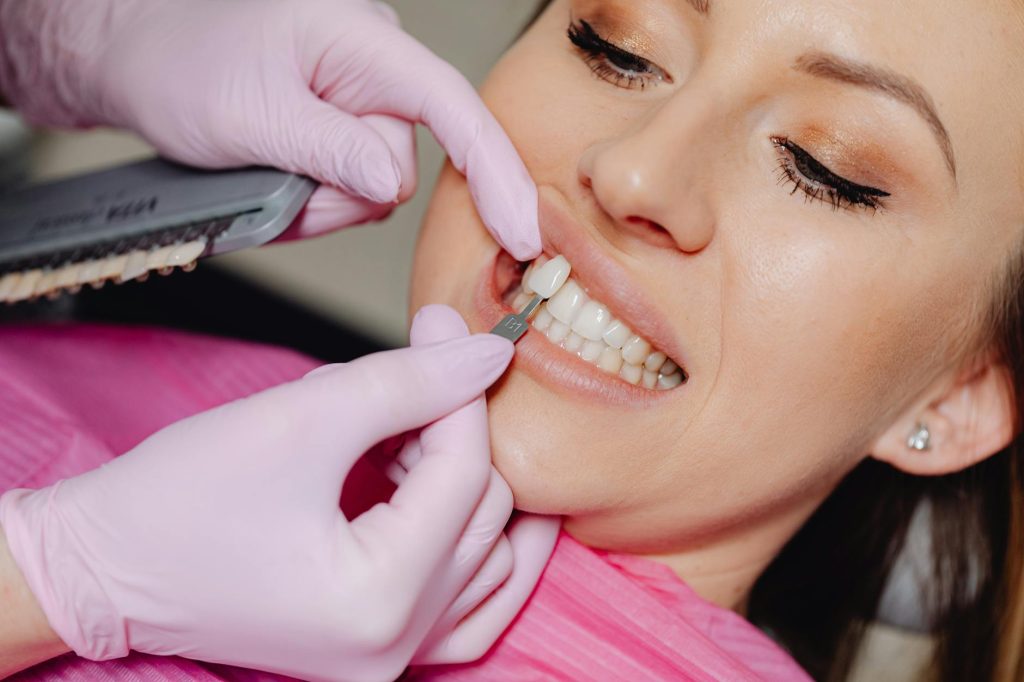
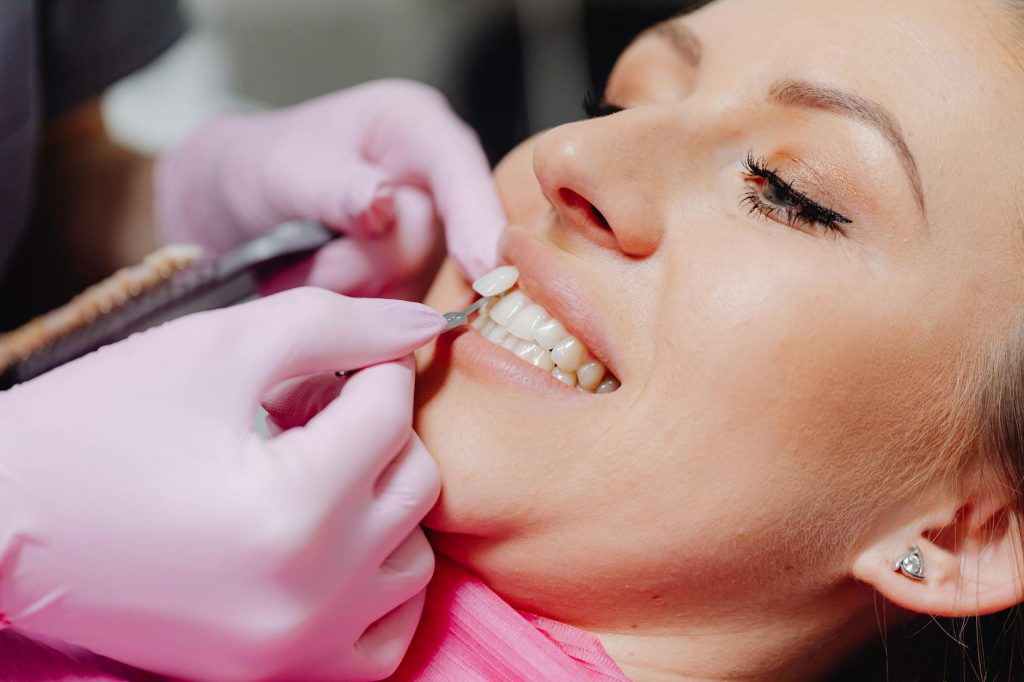
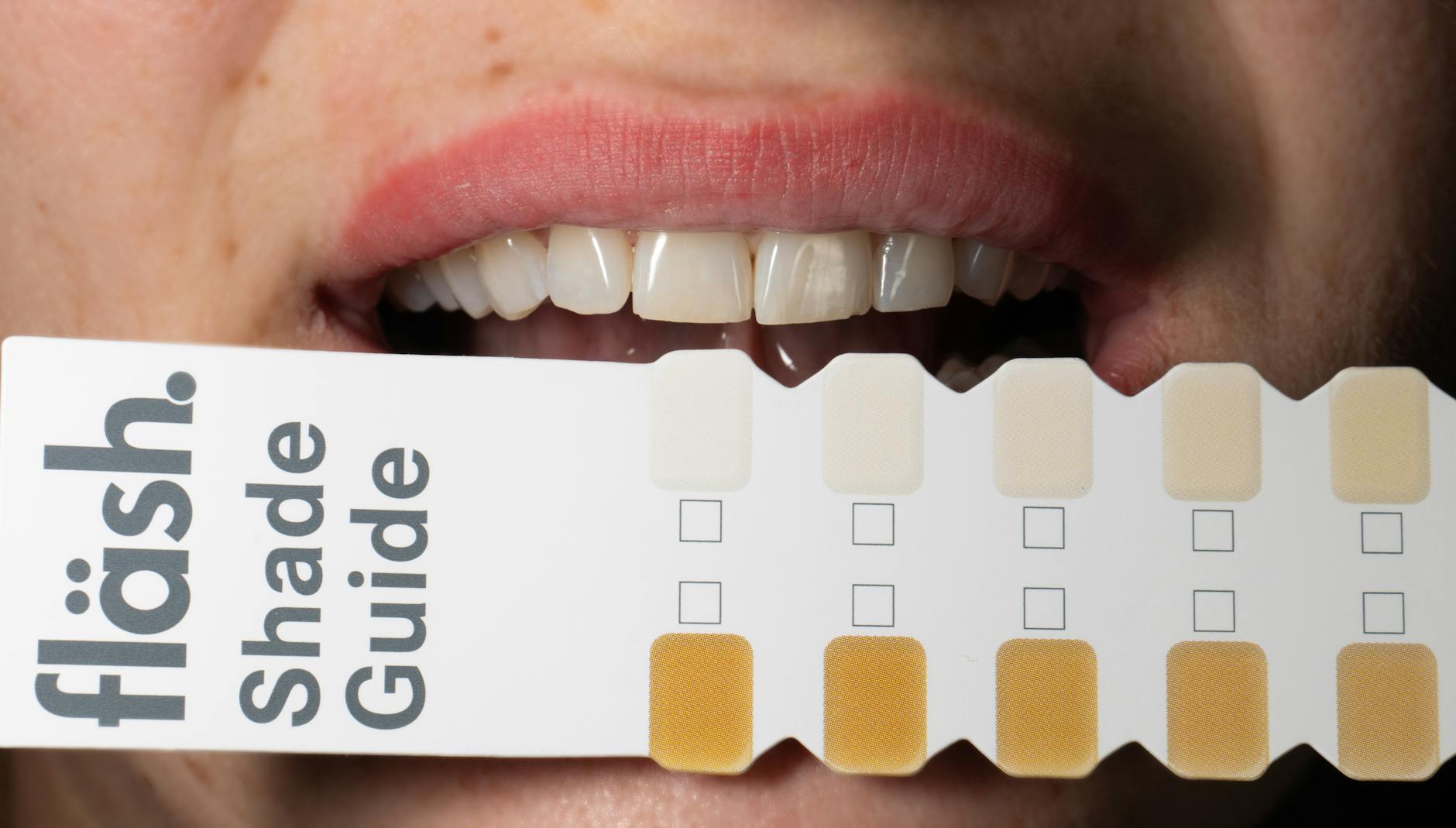
- Shade assessment — Using a Vita shade guide, your starting color is documented so results can be measured objectively.
- Gum protection — A liquid rubber dam or protective resin is applied along the gum line to prevent soft tissue irritation.
- Gel application — Professional-grade hydrogen peroxide gel (25-40%) is applied directly to the tooth surfaces in a controlled, even layer.
- Light activation — A high-intensity LED lamp (such as Philips Zoom WhiteSpeed) accelerates the chemical breakdown of stain molecules within the enamel.
- Multiple cycles — The gel is applied and activated in 3-4 cycles of 15 minutes each, with fresh gel for each round.
- Desensitizing treatment — A fluoride or potassium nitrate gel is applied post-treatment to reduce sensitivity.
Total chair time: approximately 60-90 minutes. Most patients see 6-8 shades of improvement. Some see up to 10 shades depending on the type and severity of discoloration. Learn more about professional whitening costs in Miami.
Side-by-Side Comparison
This table breaks down the key differences between at-home and professional teeth whitening across the factors that matter most:
| Factor | At-Home (Strips/Kits) | Take-Home Trays (Dentist) | In-Office Professional |
|---|---|---|---|
| Cost | $20 – $200 | $250 – $500 | $400 – $800 |
| Peroxide Concentration | 6 – 10% hydrogen peroxide | 10 – 15% carbamide peroxide | 25 – 40% hydrogen peroxide |
| Shade Improvement | 2 – 4 shades | 3 – 6 shades | 6 – 8 shades |
| Time to Results | 2 – 6 weeks | 1 – 2 weeks | 1 session (60-90 min) |
| Results Duration | 3 – 6 months | 6 – 12 months | 12 – 24 months |
| Evenness | Inconsistent, especially on misaligned teeth | Good (custom tray ensures contact) | Excellent (dentist-controlled application) |
| Safety | Moderate (risk of gum irritation) | High (professional supervision) | Highest (full clinical control) |
| Sensitivity Risk | Moderate | Moderate (managed with desensitizer) | Low-Moderate (managed in-office) |
The Science Behind Whitening: Why Professional Treatments Win
All peroxide-based whitening works through the same basic chemistry. Hydrogen peroxide penetrates the enamel and reaches the dentin layer, where it breaks down chromophore molecules (the compounds that cause discoloration) through an oxidation reaction. The peroxide releases free radicals that fragment large, dark-colored stain molecules into smaller, lighter-colored ones.
The key difference is concentration and activation energy. Higher peroxide concentrations combined with light activation create a more aggressive oxidation reaction that breaks down a greater number of chromophores per session. This is why a 60-minute Zoom treatment can accomplish what weeks of strip use cannot match.
There is also the issue of intrinsic vs. extrinsic stains. Surface stains from coffee, wine, and tobacco respond to almost any whitening product. But deeper discoloration from aging, tetracycline antibiotics, or fluorosis requires higher concentrations and professional-grade activation to penetrate and treat effectively. At-home products struggle with intrinsic staining. You might also be interested in natural approaches to teeth bleaching, though these are generally limited to surface stain removal.
Is At-Home Whitening Safe? Risks to Know
At-home whitening is generally safe when used as directed, but there are real risks that consumers should understand:
- Gum irritation — Strips and generic trays can allow gel to contact gum tissue, causing chemical burns, white spots, or soreness. Custom trays minimize this risk significantly.
- Enamel damage — Overuse or misuse of whitening products (using them more frequently than directed, or using multiple products simultaneously) can lead to enamel demineralization and increased porosity.
- Uneven results — One-size-fits-all strips do not conform perfectly to every tooth, leading to white spots on some teeth and unchanged areas on others.
- Tooth sensitivity — Temporary sensitivity to hot and cold is common with any peroxide-based whitening. Without professional guidance, patients may not know when to stop or how to manage it.
- Ignoring underlying issues — Whitening over a cavity, crack, or area of gum recession can cause significant pain. A dentist always examines your teeth before proceeding.
The ADA recommends consulting your dentist before using any whitening product, even over-the-counter ones, to rule out contraindications and set realistic expectations.
Philips Zoom Whitening at Smile Dental Center
At Smile Dental Center in Miami, we use the Philips Zoom WhiteSpeed system, the most widely studied and clinically validated professional whitening technology available. Zoom is the only professional whitening lamp with a variable-intensity setting, allowing your dentist to adjust the light output based on your sensitivity level.
Our teeth whitening protocol includes:
- Pre-treatment exam and cleaning to maximize gel contact with clean enamel
- Digital shade matching before and after for documented results
- Three 15-minute Zoom WhiteSpeed cycles with fresh gel application each round
- Post-treatment desensitizing application with ACP (amorphous calcium phosphate)
- Take-home touch-up kit with custom trays for maintenance
Patients at our Miami clinic (9835 SW 40th St, Miami FL 33165) consistently achieve 6-8 shades of improvement in a single appointment. We also offer Zoom whitening at our Medellín location starting from $300, making it an excellent option for patients traveling for cosmetic dental treatments.
Frequently Asked Questions
How long does professional teeth whitening last compared to at-home strips?
Professional in-office whitening results typically last 12-24 months with proper care, while at-home strip results fade within 3-6 months. The difference comes down to the depth of stain removal. Professional treatments penetrate deeper into the enamel and dentin, producing longer-lasting color change. Avoiding coffee, red wine, and tobacco extends results for both methods.
Can I use whitening strips after professional whitening to maintain results?
Yes, but custom take-home trays from your dentist are a better maintenance option. They provide more even gel distribution and use professional-grade formulas that are more effective than drugstore strips. Most dentists recommend touch-up sessions every 3-6 months. Using strips on top of recent professional whitening can increase sensitivity unnecessarily.
Does teeth whitening damage enamel permanently?
When used correctly and under dental supervision, whitening does not cause permanent enamel damage. Studies show that professional hydrogen peroxide treatments at recommended concentrations cause only temporary and reversible changes to enamel microstructure. However, excessive use of over-the-counter products beyond manufacturer guidelines can lead to enamel erosion and increased tooth porosity over time.
Why are my teeth sensitive after whitening and how long does it last?
Sensitivity occurs because peroxide temporarily opens the microscopic tubules in your enamel that lead to the tooth nerve. This allows temperature changes to stimulate the nerve more easily. Post-whitening sensitivity typically resolves within 24-72 hours. Your dentist can apply desensitizing agents containing potassium nitrate or fluoride to minimize discomfort and speed recovery.
Is professional whitening worth the extra cost over at-home kits?
For most patients, yes. Professional whitening costs more upfront but delivers dramatically better results in a single visit. When you factor in the cost of buying multiple at-home kits to achieve and maintain similar results over time, the price difference narrows considerably. Professional treatment also includes a dental exam that can catch issues early, adds clinical safety, and produces more predictable outcomes.
Ready for a Brighter Smile in One Visit?
Philips Zoom whitening at Smile Dental Center delivers 6-8 shades of improvement in about an hour. Our Miami team will assess your teeth, recommend the best approach for your goals, and get you smiling brighter the same day.
Message us on WhatsApp or call (786) 560-7567