

By the Clinical Team at Smile Dental Center — Last updated: March 2026
One of the most common questions we hear from patients is: “How much do composite veneers actually cost?” It’s a reasonable question — and the honest answer is that the price varies more than most people expect. A single tooth can cost $150 at a budget clinic or $700 at a premium practice. A full-smile treatment can run anywhere $3,000 (in Colombia) to $6,000+ (in a major US city).
In this guide, we break down exactly what drives composite veneer pricing, what you should expect to pay in different markets, and how to evaluate whether the cost is worth it for your specific situation.
Composite Veneers Cost: The Core Numbers
Here’s a straightforward overview of what composite veneers cost across different scenarios:
| Treatment Scope | US Average | SDC Miami | SDC Medellín |
|---|---|---|---|
| Single tooth | $200–$600 | $350–$500 | $90–$120 |
| 6-tooth smile | $1,200–$3,600 | $2,100–$3,000 | $1,800–$720 |
| Full smile (10–12 teeth) | $3,000–$6,000 | $3,500 | $900 |
| Porcelain (full smile, for comparison) | $8,000–$25,000+ | $8,500 | $6,500 |
- Composite veneers cost $200–$600 per tooth in the US; a full smile runs $3,000–$6,000 on average.
- At Smile Dental Center Miami, a complete composite veneer set costs $3,500.
- The same treatment at SDC Medellín costs just $900 — roughly 80% less.
- Price variation is driven by location, dentist experience, number of teeth, and material quality.
- Porcelain veneers cost 4–5x more than composite but offer greater durability and longevity.
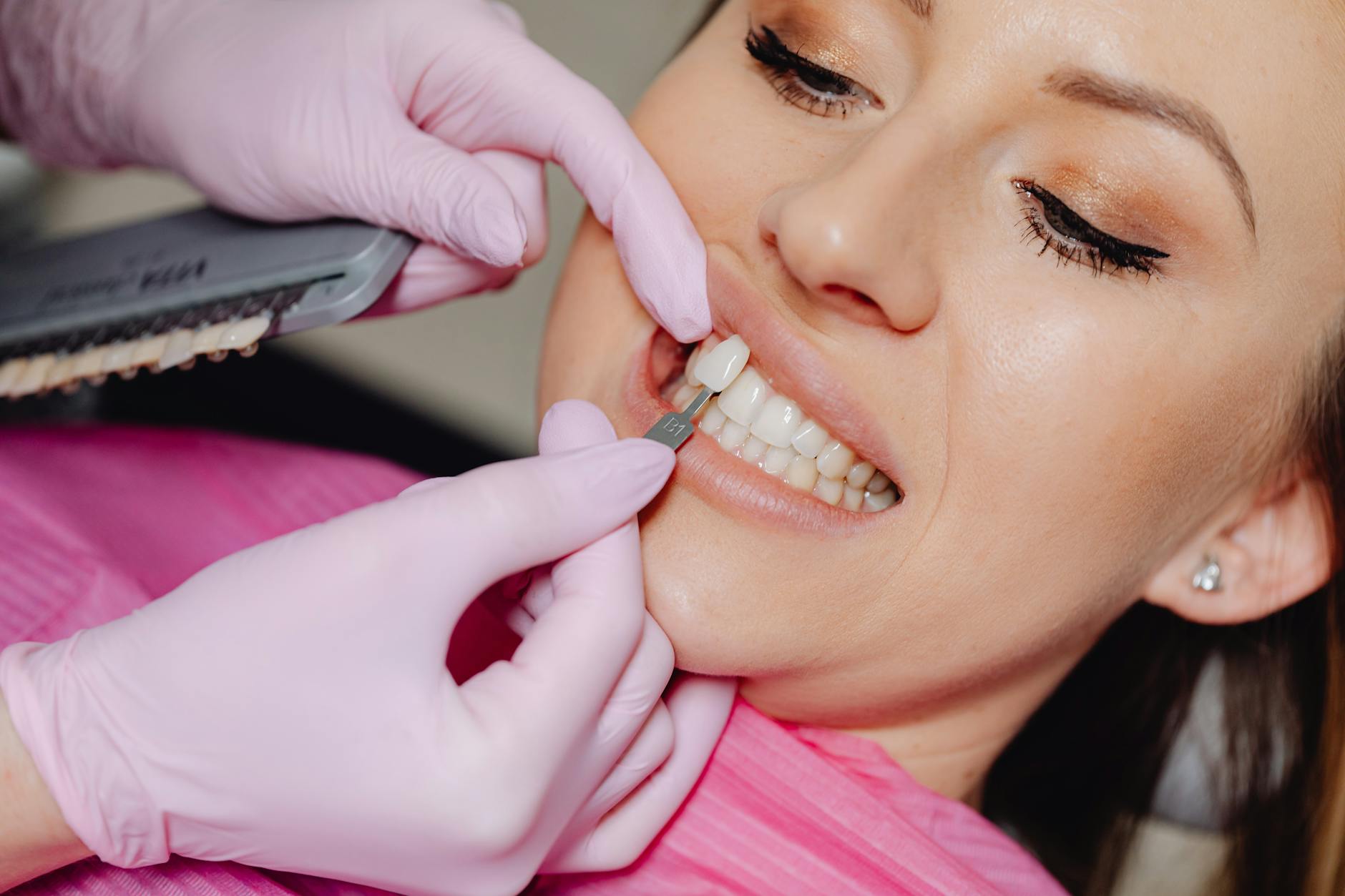
What Factors Affect Composite Veneer Cost?
The gap between a $200 per-tooth composite veneer and a $600 per-tooth one isn’t arbitrary. Here’s what’s actually driving the difference:
1. Geographic Location
This is the single biggest cost driver. Dental practices in New York City, Los Angeles, and Miami pay significantly higher overhead — rent, staff salaries, insurance — than practices in smaller markets. A composite veneer in Manhattan will almost always cost more than the same procedure in rural Tennessee, even if the clinical quality is identical. International destinations like Medellín, Colombia represent the far end of this spectrum: operating costs are a fraction of US prices, allowing clinics to charge dramatically less without sacrificing material quality.
2. Dentist Experience and Specialization
Composite veneers are a highly technique-sensitive procedure. An experienced cosmetic dentist who has placed hundreds of cases — like our team at Smile Dental Center, which has completed more than 500 composite and porcelain veneer cases — will typically charge more than a general dentist offering cosmetic services as an add-on. You’re paying for precision, artistic judgment, and a higher likelihood of a result that looks genuinely natural.
3. Number of Teeth Treated
Most practices offer a per-tooth price, but many provide package pricing for full-smile treatments. Treating 10–12 teeth at once is more efficient than doing one tooth at a time, and clinics often reflect this with a discounted bundled rate. If you’re considering composite veneers, ask specifically about full-smile pricing — it’s almost always better value than multiplying the per-tooth rate.
4. Material Grade
Not all composite resins are created equal. Premium nanohybrid and nanofilled composites (such as Filtek Supreme or Ceram.x) offer better polish retention, translucency, and color stability than budget alternatives. High-end composite materials cost more but produce significantly better long-term aesthetics. When comparing quotes, ask which material brand the clinic uses.
5. Complexity of Your Case
Teeth with significant crowding, gaps, chips, or discoloration require more time and material. A straightforward shape refinement on already well-aligned teeth will cost less than a case involving major reshaping or closing large diastemas. During your consultation, your dentist will assess complexity and factor this into the quote.
Composite vs. Porcelain: Is the Price Difference Worth It?
The composite-vs-porcelain question is fundamentally a cost-benefit calculation. Composite veneers at $3,500 in Miami offer an immediate, beautiful result with no waiting period. Porcelain veneers at $8,500 offer greater durability (15–20 years vs. 5–10 years for composite), superior stain resistance, and a more customized aesthetic.
For many patients, composite is the smarter first step — especially if you’re younger, want to test a new smile shape, or are working with a tighter budget. You can always upgrade to porcelain later. To dig deeper into this comparison, read our full guide on -composite-veneers-worth-it/”>are composite veneers worth it
If cost is the primary concern, the most dramatic savings come from combining composite or porcelain veneers with dental tourism. Getting veneers in Colombia through Smile Dental Center’s Medellín location means the same clinical team, the same material standards, and the same aesthetic protocols — at a fraction of the price.
Does Insurance Cover Composite Veneers?
In nearly all cases, no. Composite veneers are classified as a cosmetic procedure by dental insurers, which means they fall outside the scope of standard dental coverage. Some plans may cover a portion of the cost if the veneer is being placed to restore a broken or damaged tooth (as opposed to purely aesthetic improvement), but this exception is narrow and requires documentation from your dentist.
Financing is a more realistic path for most patients. Many cosmetic dental practices — including Smile Dental Center — offer third-party financing options (such as CareCredit or LendingClub) that allow you to spread treatment costs over 12–36 months, often with promotional interest r

ates.
The Research Behind Composite Veneer Longevity
Understanding the clinical evidence helps contextualize why price differences exist. Research published on PubMed/NCBI shows that direct composite veneers placed by experienced clinicians have survival rates of 80–90% at 5 years and 60–70% at 10 years — respectable numbers for a non-invasive, reversible procedure. The American Academy of Cosmetic Dentistry also provides guidelines that help practitioners achieve consistently high clinical outcomes.
The implication: the material and technique matter enormously. A cheap composite veneer placed with inadequate layering technique or low-quality resin will fail sooner and look worse — making the “affordable” option ultimately more expensive.
Getting Composite Veneers in Miami: What You’ll Pay
At Smile Dental Center’s Miami clinic (9835 SW 40th St, Miami FL 33165), a full composite veneer smile makeover is priced at $3,500 depending on the number of teeth and case complexity. This includes your consultation, digital smile design preview, the full procedure, and all follow-up care. We use premium nanohybrid composite materials and our cosmetic dentists have extensive experience in both smile design and composite artistry.
We’re happy to provide a precise quote following a consultation. Contact us via WhatsApp at +1 (786) 560-7567 or email info@smiledentalcentergroup.com.
Frequently Asked Questions
How much do composite veneers cost per tooth?
In the United States, composite veneers typically cost $200–$600 per tooth, depending on the city, clinic, and dentist’s experience. Premium cosmetic practices in major cities like Miami or New York tend to be at the higher end. Full-smile package pricing is usually better value than multiplying the per-tooth rate — ask about bundled pricing at your consultation.
Why are composite veneers cheaper than porcelain?
Composite veneers are applied chairside in a single appointment using composite resin sculpted directly onto the tooth. Porcelain veneers require a dental laboratory to custom-fabricate ceramic shells, adding lab fees (typically $300–$800 per tooth) and a second appointment. The material cost and lab process make porcelain significantly more expensive, though also more durable and stain-resistant.
Does insurance cover composite veneers?
Standard dental insurance does not cover composite veneers because they are classified as a cosmetic procedure. A narrow exception may apply if the veneer is restoring a fractured or damaged tooth, but this requires clinical documentation. Financing through CareCredit, LendingClub, or similar providers is the most common path for patients who need to spread the cost over time.
Are cheap composite veneers worth it?
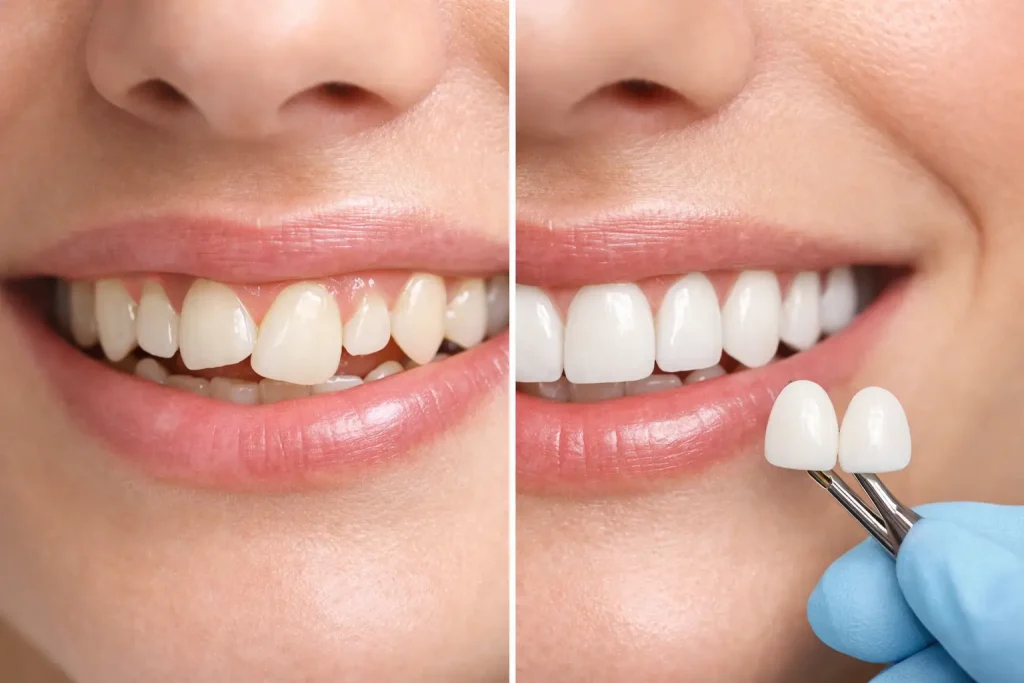
It depends on what’s driving the low price. If a clinic charges less due to lower geographic overhead (like our Medellín location), quality may be completely comparable. If the lower price reflects inexperienced dentists or budget materials, you risk poor aesthetics, premature failure, and the cost of redoing the work. Always ask about material brands and view before/after photos before committing.
How much do composite veneers cost in Miami specifically?
In Miami, composite veneers generally cost $350–$600 per tooth, or $3,500 for a full-smile set at Smile Dental Center. Some practices offer lower entry-point pricing but may use less experienced clinicians or lower-grade materials. At SDC Miami, the price includes digital smile design, premium composite materials, and the work of cosmetic dentists with 500+ cases of experience.