
If your teeth look slightly crowded, uneven, or out of line every time you smile in photos, you may not be looking for two years of orthodontics. Many adults want a faster cosmetic upgrade, and porcelain veneers for crooked teeth are often the treatment that gets them there. The key is knowing when veneers are the right shortcut and when a more functional correction is the better move.
Veneers can create the look of straighter teeth by changing the visible front surface of each tooth. That means shape, width, length, and alignment can all be refined as part of one smile design plan. For the right patient, the result is dramatic – cleaner lines, better symmetry, and a smile that looks brighter and more balanced in a matter of visits, not years.
Can porcelain veneers fix crooked teeth?
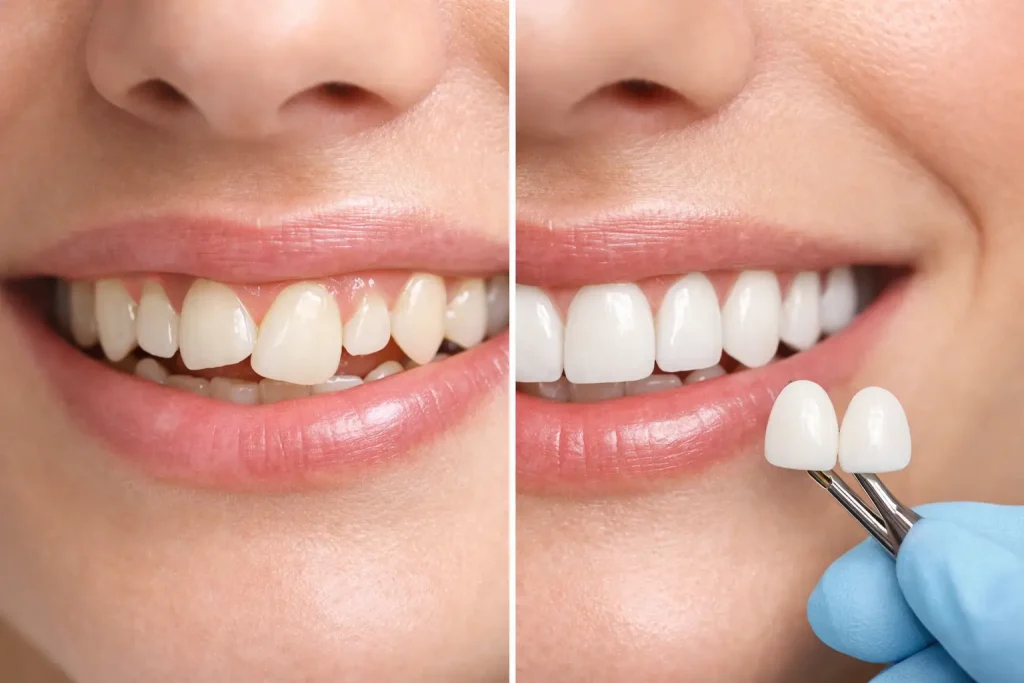
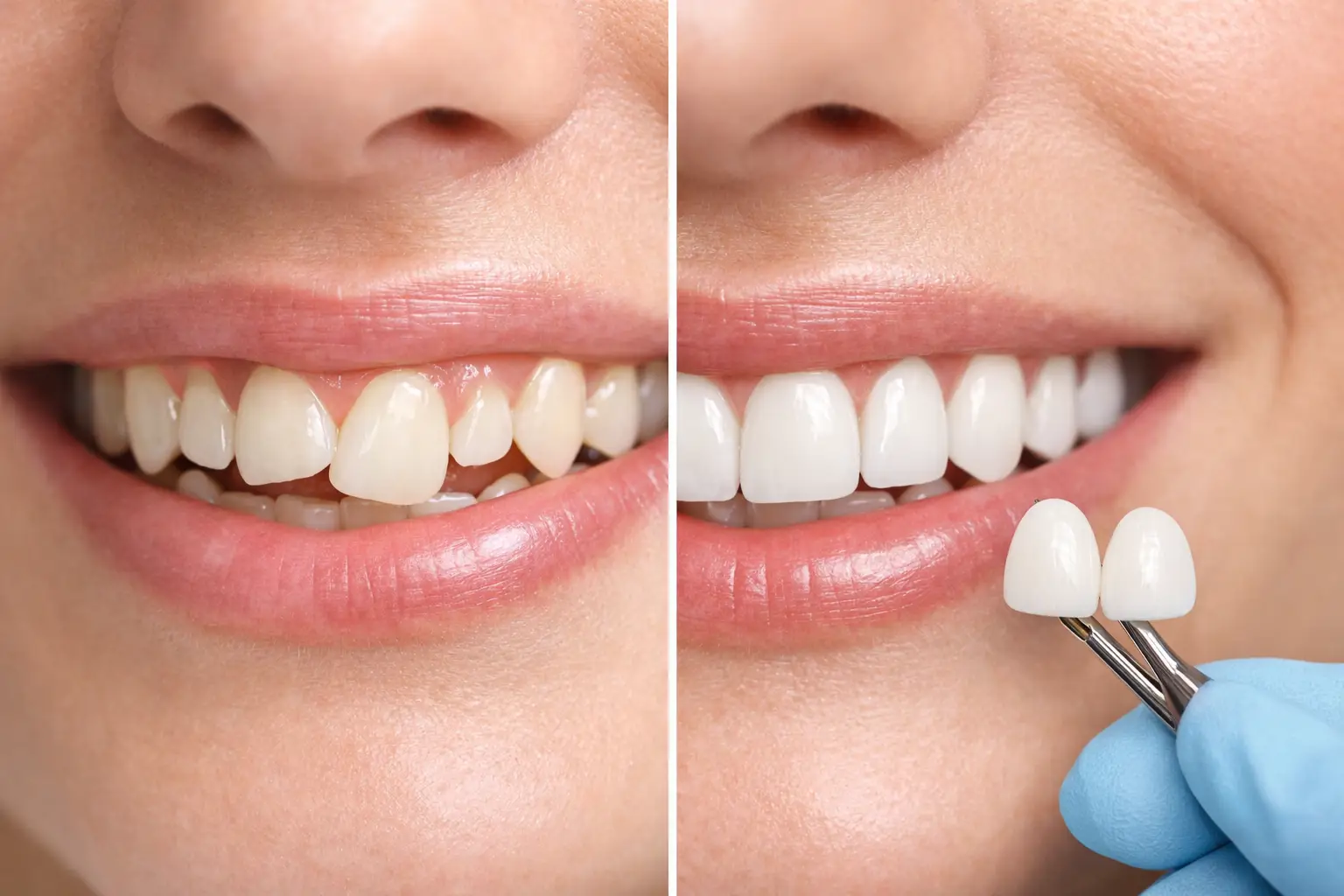
Yes, but with an important distinction. Veneers do not physically move teeth the way braces or clear aligners do. Instead, they camouflage mild to moderate crookedness by redesigning what the teeth look like from the front.
That difference matters. If a tooth is rotated slightly, set back, or overlaps another tooth a bit, a well-planned veneer case can make the smile appear straight and uniform. If the crowding is severe, the bite is unstable, or the teeth are positioned in a way that affects function, veneers alone may not be the smartest option.
This is why a cosmetic consultation should never be just about shade selection. A proper evaluation looks at bite, jaw relationship, tooth wear, gum levels, and the amount of enamel available. Great cosmetic results come from good planning, not just good materials.
When porcelain veneers for crooked teeth make sense
The best veneer cases are usually people who want a strong aesthetic improvement and have alignment issues that are visible but not structurally extreme. That often includes small overlaps, minor rotations, narrow arches that make teeth look uneven, or front teeth that vary in size and angle.
Veneers also make sense when crookedness is only part of the concern. Many patients also want to correct discoloration, worn edges, small gaps, short teeth, or asymmetry at the same time. That is where veneers can outperform orthodontics alone. Straightening teeth may improve alignment, but it will not automatically change color, proportion, or shape. Veneers can address all of those together.
For adults getting ready for a wedding, career milestone, media-facing role, or simply a long-delayed confidence upgrade, speed is often part of the decision. Veneers can deliver a polished, camera-ready result much faster than orthodontic treatment.
When veneers are not the best answer
There are cases where covering crooked teeth is the wrong approach. If the teeth are significantly crowded, protruded, or affected by a bad bite, placing veneers on top of those positions may require too much reduction or create bulky results. That can compromise both esthetics and long-term comfort.
If you grind heavily, have untreated gum disease, active decay, or weakened teeth, those issues need to be managed first. Sometimes the best plan is staged treatment – hygiene and restorative care first, then aligners or minor orthodontics, then veneers for the final refinement.
That may sound less exciting than a fast cosmetic fix, but it often leads to a more stable and more beautiful result. The perfect smile is not just about what looks straight on day one. It is about what still looks and feels right years later.
What veneers can improve beyond alignment
One reason porcelain veneers are so popular is that they do more than make teeth look straighter. They can also create a brighter color that resists staining better than natural enamel, improve proportions so the smile looks more harmonious, and smooth out chips, worn edges, and irregular contours.
This is especially appealing for patients who feel their smile looks tired or inconsistent, not just crooked. A smile design approach can adjust tooth size, shape, color, and position together so the final result looks intentional, balanced, and natural on your face.
That facial fit matters. The best veneer cases do not look like identical white tiles. They look like your features were elevated – more polished, more symmetrical, more confident.
The trade-off: fast cosmetic change vs real tooth movement
There is no universal winner between veneers and orthodontics. It depends on your anatomy, your timeline, and your goals.
If your main priority is true repositioning of teeth with no removal of enamel, orthodontics has an obvious advantage. It moves teeth conservatively and can improve bite relationships at the same time. The trade-off is time, and sometimes the need for a second cosmetic step after straightening if you still want shape or color changes.
If your priority is a fast, high-impact transformation that also improves shade and symmetry, veneers may be the stronger choice. The trade-off is that veneers are irreversible in most cases because a small amount of enamel is usually reshaped.
Some of the best outcomes come from combining both. A short course of aligners can create a better foundation, and veneers can then fine-tune the final look with less preparation. For patients who want the best results, not just the fastest ones, that hybrid approach can be worth considering.
What the process looks like
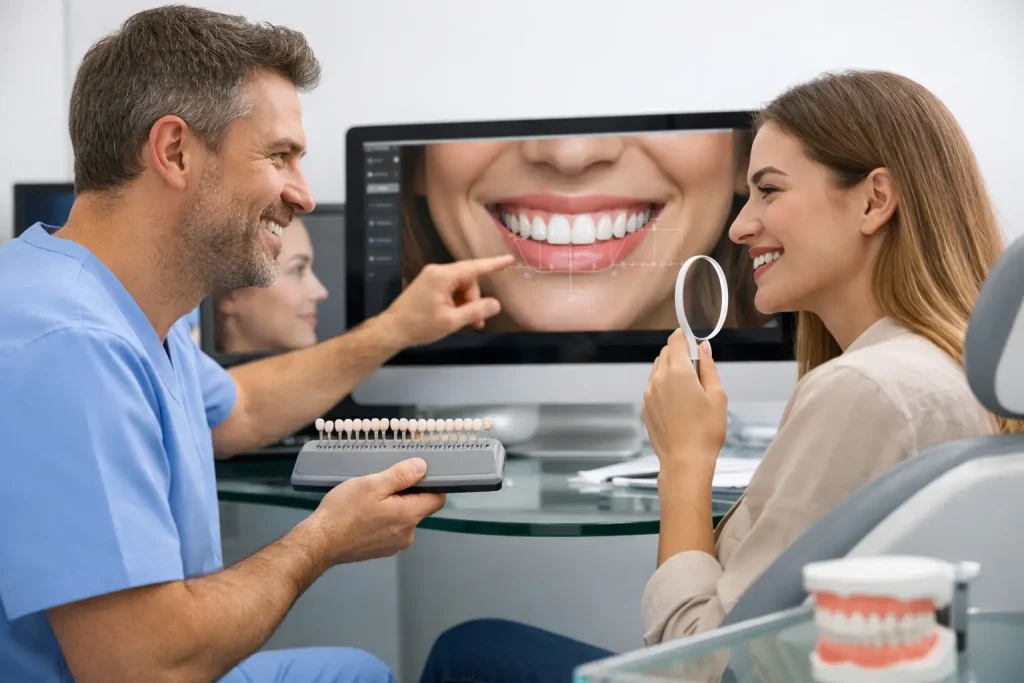
A high-level veneer case should feel structured, not rushed. It typically starts with a consultation, photos, digital imaging, and a detailed exam of the teeth and gums. In some cases, X-rays or 3D imaging are part of planning, especially when bite, wear, or underlying dental issues are involved.
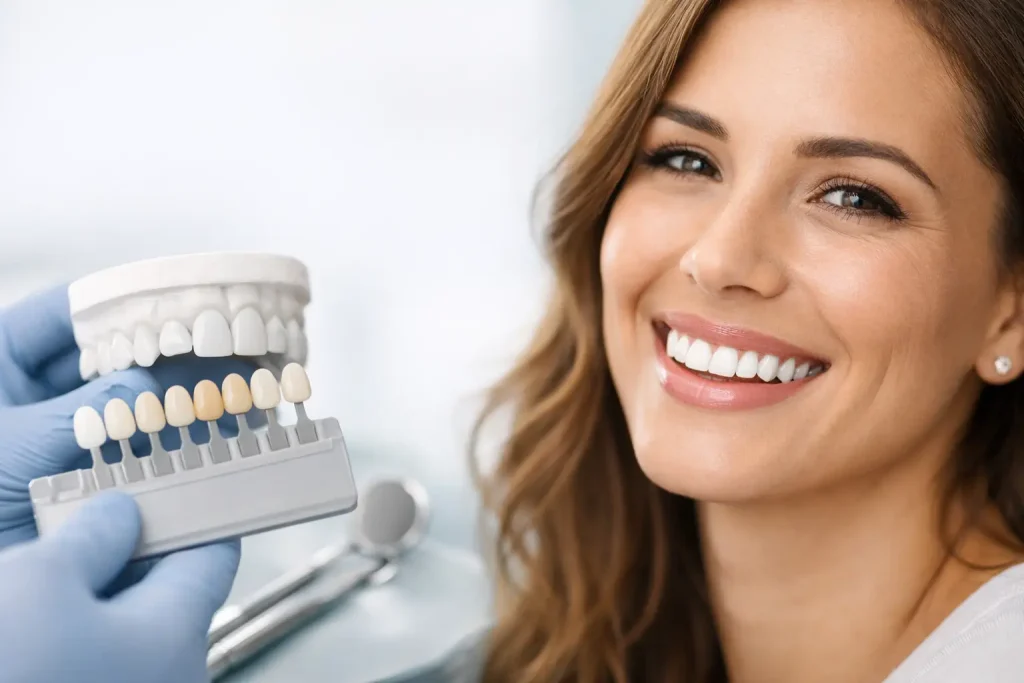
From there, the smile is designed around your face, lip line, gum display, and goals. This stage is where size, shape, and color decisions matter most. A patient may say they want straight teeth, but what they usually mean is they want a smile that looks clean, youthful, and expensive in the best way. Design is what translates that goal into a real treatment plan.
The teeth are then lightly prepared if needed, impressions or digital scans are taken, and temporary veneers may be placed while the final porcelain is made. At the delivery visit, each veneer is checked for fit, esthetics, and bite before bonding.
When this process is done with precision, the result should not look fake or oversized. It should look like the best version of your own smile.
How long do porcelain veneers last?
Porcelain veneers are durable, but they are not maintenance-free. Many last well over a decade with good care. Longevity depends on material quality, bite forces, oral habits, and how well the case was planned from the start.
If you clench or grind, a night guard may be recommended. If the bite is ignored or the veneers are placed on unstable teeth, they are more likely to chip, debond, or wear unevenly. Daily brushing, flossing, and regular dental visits still matter. Cosmetic dentistry looks its best when the foundation stays healthy.
Are porcelain veneers worth it for crooked teeth?
For the right person, absolutely. If your crookedness is mild to moderate and you want a major visual upgrade in a shorter timeframe, veneers can be one of the most powerful smile design treatments available. They offer speed, predictability, and a high-end cosmetic result that can change how you show up at work, in photos, and in everyday life.
But worth it does not mean automatic. A smart decision comes from an honest exam and a treatment plan built around both esthetics and function. If a provider is promising veneers for every crooked case without discussing bite, enamel, or alternatives, that is a red flag.
At a design-focused practice like Smile Dental Center Group, the goal is not to push one treatment. It is to create the smile that fits your face, your timeline, and your long-term dental health. Sometimes that is veneers. Sometimes it is aligners first. Sometimes it is a broader cosmetic plan.
If you have been hiding your smile because your teeth look uneven, crowded, or off-center, the next step is simple: get evaluated with real imaging and a real design plan. The right treatment should do more than cover flaws. It should give you a smile you are ready to use with confidence.