

By the Clinical Team at Smile Dental Center — Last updated: March 2026
Every month, our Miami team fields dozens of questions from patients who found snap-on veneers while searching for an affordable smile upgrade — and who want to know whether they are as good as the real thing. After reviewing outcomes across more than 1,400 veneer cases and fielding countless snap-on inquiries, we have earned the right to give you an honest answer rather than a sales pitch: snap-on veneers and composite veneers are not the same product, they do not produce the same results, and they are not suited to the same patients. Here is everything you need to know to make the right choice.
- Snap-on veneers are removable covers — they do not fix, bond to, or alter your teeth in any way.
- Composite veneers are permanently bonded restorations placed by a dentist in a single appointment.
- Snap-ons look obviously fake in most cases; composite veneers are virtually indistinguishable from natural teeth.
- Snap-ons are appropriate for temporary use (events, photography) or testing a new smile shape — not for everyday wear.
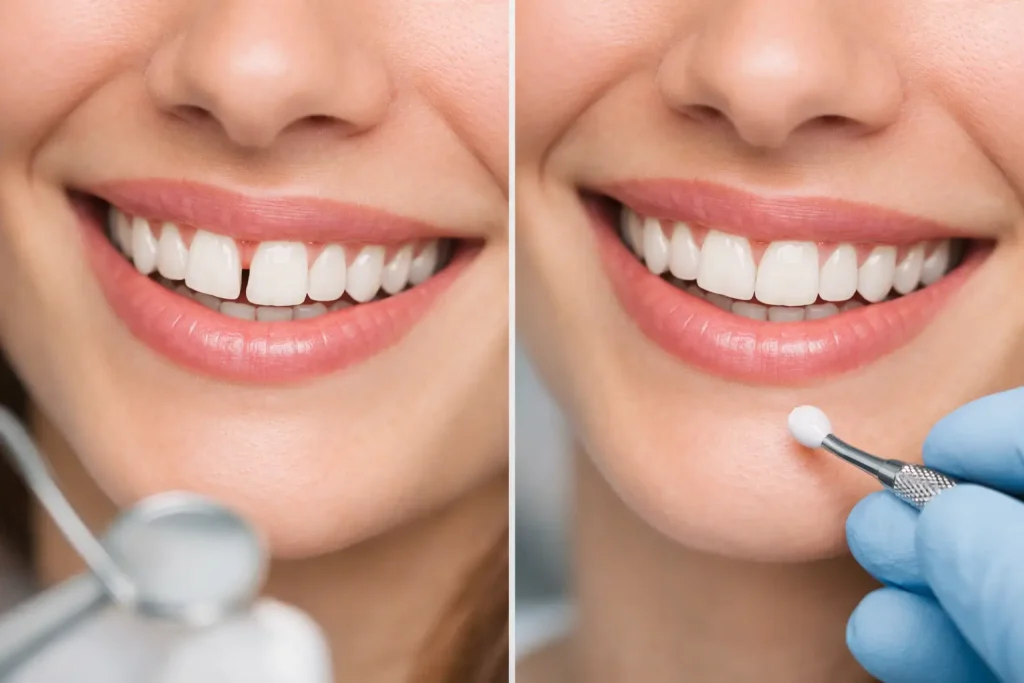
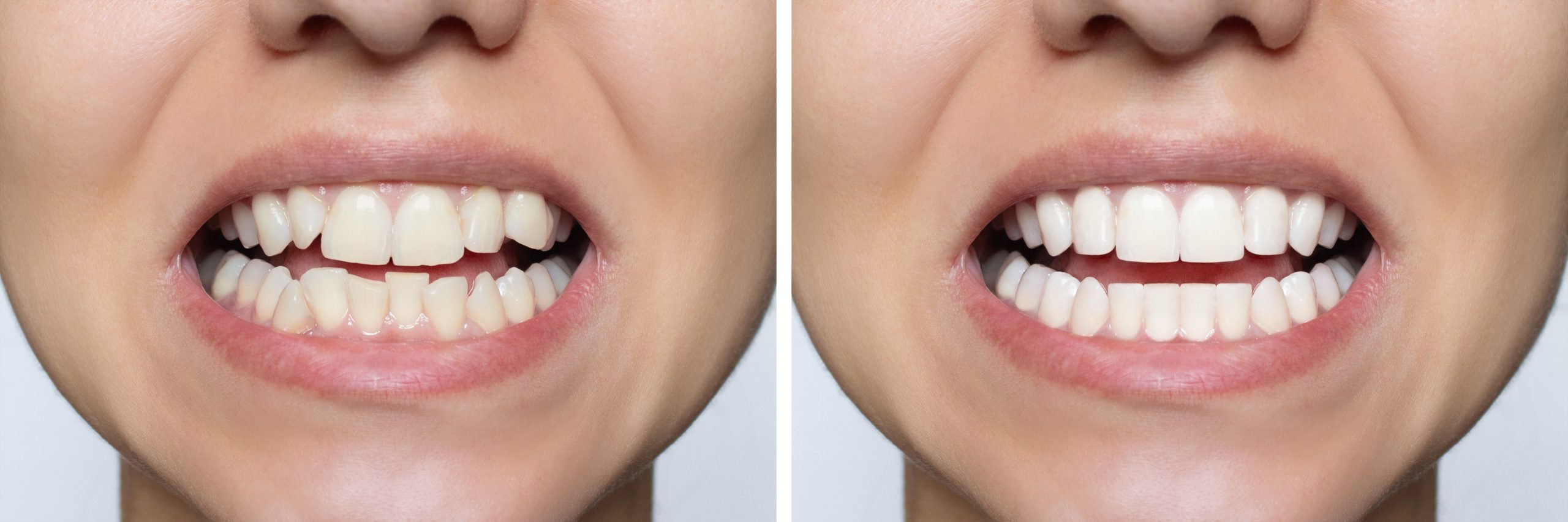
- Composite veneers address real cosmetic concerns: discoloration, chips, worn edges, minor misalignment, and gaps.
What Are Snap-On Veneers?
Snap-on veneers (also called clip-on veneers or removable veneers) are thin acrylic or resin shells that fit over your existing teeth like a retainer-style cover. The most well-known professional version is Snap-On Smile, offered at some dental offices. There are also dozens of direct-to-consumer mail-order brands (Instasmile, Brighter Image Lab, etc.) that require patients to send impressions by mail and receive a device back without any in-person dental evaluation.
How Snap-On Veneers Work
Mail-order snap-ons require you to make a putty impression of your teeth at home and mail it to the company. They fabricate a plastic overlay to fit your bite and mail it back. Dental office snap-on veneers (Snap-On Smile) involve taking impressions in a clinical setting and are custom-fabricated for better fit. Neither type involves altering your teeth — there is no drilling, bonding, or dental adhesive. You snap them on and take them off.
What Are Composite Veneers?
Composite veneers in Miami are tooth-colored composite resin restorations applied directly to the front surface of your teeth by a cosmetic dentist. The resin is sculpted, shaped, and polished to create a natural, seamless result. Unlike snap-ons, composite veneers become part of your tooth — they bond chemically to the enamel and do not come off. The entire process is completed in a single 1–2 hour appointment in most cases.
How Composite Veneers Work
The dentist cleans and lightly etches the tooth surface, applies a bonding agent, and then layers the composite resin onto the tooth. Each layer is cured with a UV light before the next is added. The dentist then sculpts the final shape, checks your bite, and polishes the surface to a natural tooth-like sheen. In most cases, no enamel removal is necessary, which means the procedure is reversible if you later choose a different option.
Side-by-Side Comparison
| Feature | Snap-On Veneers | Composite Veneers |
|---|---|---|
| Type | Removable cover (no bonding) | Permanently bonded restoration |
| Cost | $300–$1,500 (mail order) / $1,500–$3,000 (dental office) | $200–$600/tooth; $4,000–$5,500 full set |
| Appearance | Plastic-looking; often obvious | Natural; virtually undetectable |
| Lifespan | 1–5 years (with careful handling) | 5–7 years with good care |
| Tooth alteration | None | Minimal to none (most cases) |
| Dentist required | No (mail order) / Yes (Snap-On Smile) | Yes |
| Fixes dental issues | No — covers them temporarily | Yes — chips, staining, gaps, wear |
| Eating/drinking | Restricted (no sticky/hard foods while wearing) | Normal after 24–48 hours |
| Dental exam required | No (mail order) — a risk | Yes — ensures no underlying problems |
The Honest Truth About Snap-On Veneers
Snap-on veneers are not inherently dishonest as a product — they do what they claim to do. The issue is that marketing often positions them as an equivalent to dental veneers at a lower price. They are not. Here is what the fine print rarely tells you:
They Can Mask Dental Problems
Mail-order snap-ons do not require a dental exam. That means underlying decay, gum disease, cracked teeth, or bite problems go undetected and untreated — and potentially worsen under the cover. Purchasing snap-ons without a professional dental evaluation is genuinely risky from a health standpoint.
They Are Obvious Up Close
The thickness required to create a removable cover that snaps over existing teeth is fundamentally different from the thin shell of a composite or porcelain veneer bonded flush to the tooth surface. Snap-ons tend to look bulky, and the acrylic material does not replicate the translucency of natural enamel. Anyone close to you will likely notice.
They Are Not for Daily Wear
Most manufacturers advise against wearing snap-on veneers while eating hard or sticky foods, sleeping, or for extended daily use. In practice, this severely limits their usefulness as an everyday cosmetic solution.
We Don’t Offer Snap-Ons — Here’s Why
Smile Dental Center does not provide snap-on veneers. That is not because we have not evaluated them — it is because they do not meet the standard of care we believe every patient deserves. Our goal is to deliver results you can eat, sleep, and live your life with comfortably, and that look natural enough that nobody knows you had anything done. Snap-on veneers do not accomplish that.
If your primary concern is cost, we offer several genuine alternatives: composite veneers in our Miami clinic start at competitive rates, and our Medellín location offers the same composite veneer treatment for approximately $900 for a full set. Many patients also ask whether composite veneers are worth it compared to other options — that guide provides a detailed cost-benefit analysis. And for patients considering a longer-lasting upgrade, porcelain veneers offer a 10–15+ year result with unmatched aesthetics.
Who Snap-On Veneers Are Actually Right For
In the spirit of objectivity: there are genuine use cases for snap-on veneers.
- Events and photography: A wedding, photoshoot, or special occasion where you want to try a whiter, more uniform smile for one day.
- Trying a new shape: Patients curious about what a different tooth shape or color might look like before committing to permanent treatment.
- Extreme budget constraints: If you genuinely cannot afford any dental treatment and want a temporary improvement while saving.
For any of these scenarios, a dental-office-fitted snap-on (Snap-On Smile, approximately $1,500–$3,000) is vastly preferable to a mail-order version, because it is custom-fit by a dentist who can also check your oral health and ensure there are no contraindications.
Research on cosmetic dental restorations — including reviews available through PubMed/NCBI — consistently shows that direct composite resin veneers provide high patient satisfaction, strong aesthetic outcomes, and predictable longevity when placed by experienced clinicians. The American Academy of Cosmetic Dentistry recognizes composite bonding and veneers as established cosmetic procedures with well-documented track records.
Frequently Asked Questions
What are snap-on veneers?
Snap-on veneers are removable acrylic or resin covers that fit over your existing teeth like a retainer. They do not bond to the teeth, require no drilling, and can be taken on and off. They are available as mail-order kits ($300–$1,500) or as professionally fitted dental office products like Snap-On Smile ($1,500–$3,000). They are temporary cosmetic covers, not permanent dental restorations, and they do not address underlying dental health issues.
Are snap-on veneers as good as composite veneers?
No — they serve different purposes. Composite veneers are permanently bonded to your teeth, look natural, last 5–7 years, and actually address cosmetic imperfections like staining, chips, and minor misalignment. Snap-ons are temporary covers that look artificial, restrict what you can eat, and mask rather than fix dental issues. For everyday use and genuine cosmetic improvement, composite veneers are far superior.
How much do snap-on veneers cost vs composite?
Mail-order snap-on veneers cost $300–$1,500. Professionally fitted snap-on veneers (Snap-On Smile dental office brand) cost $1,500–$3,000. Composite veneers cost $200–$600 per tooth, or $4,000–$5,500 for a full set in Miami. At Smile Dental Center’s Medellín location, the same composite veneer treatment is available from approximately $900 for a full set — making professionally bonded, natural-looking veneers more accessible than many patients realize.
Can I wear snap-on veneers every day?
Most snap-on veneer manufacturers do not recommend extended daily wear. Restrictions typically include: do not eat hard or sticky foods while wearing them, do not sleep in them, and limit wear to a few hours at a time. These restrictions make snap-ons impractical as an everyday solution for most people. Composite veneers, by contrast, are permanent and require no special handling beyond normal dental hygiene.
Do dentists recommend snap-on veneers?
Most cosmetic dentists do not recommend snap-on veneers as a primary cosmetic solution for everyday use. The main concerns are: they look artificial, they do not fix dental problems, mail-order versions bypass necessary dental evaluation, and extended wear can trap bacteria against the teeth. For patients with genuine cosmetic goals and a limited budget, a dentist is more likely to recommend starting with composite bonding or composite veneers — especially if dental tourism options in Colombia are considered to bring the cost within reach.