


Key Takeaways
- Composite veneers cost $250–$1,500 per tooth nationally, but Smile Dental Center offers full-set pricing from $3,500 in Miami and $3,000 in Medellín.
- They last 5–7 years on average with proper care — roughly half the lifespan of porcelain, but at a fraction of the cost.
- Same-day placement means you walk out with a new smile in one appointment, with no temporaries and minimal tooth reduction.
- Composite veneers are reversible and repairable, making them an excellent entry point for patients exploring cosmetic dentistry.
- For patients open to dental tourism, Medellín pricing makes composite veneers accessible at a level no Miami competitor can match.
If you’re researching cosmetic dentistry, you’ve probably landed on the question: are composite veneers worth it? It’s a fair question — and one that deserves a straightforward answer rather than a sales pitch.
The truth is that composite veneers are an excellent solution for the right patient. They’re also a poor investment for others. This guide breaks down the real pros, cons, costs, and clinical data so you can make an informed decision. We’ll also share something most Miami dentists won’t tell you: how our Medellín location changes the cost equation entirely.
What Are Composite Veneers?
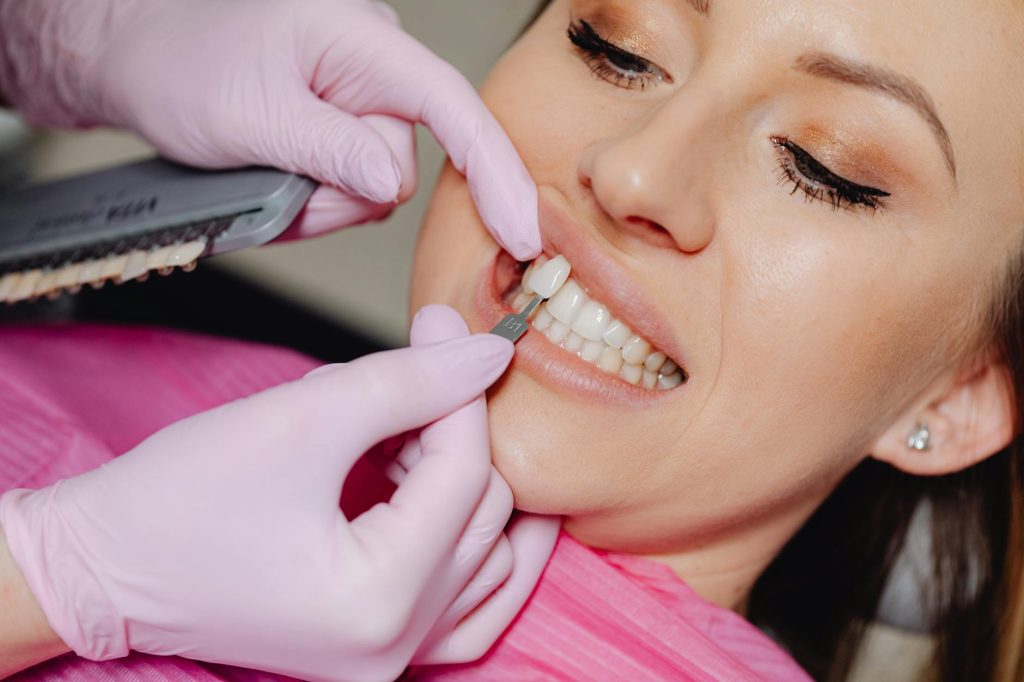
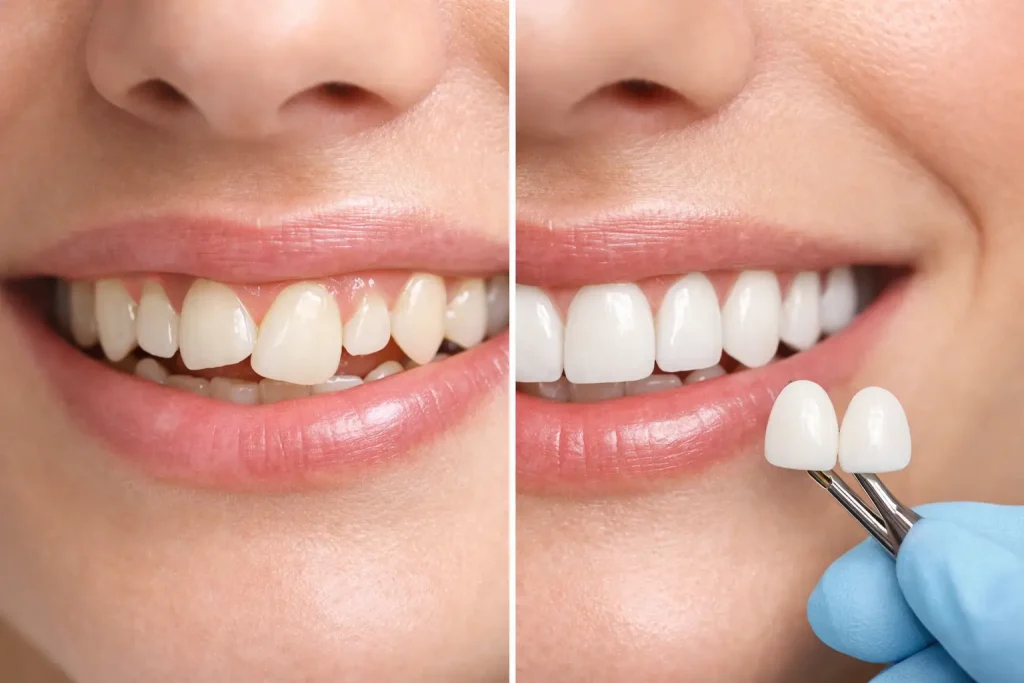
Composite veneers are thin layers of tooth-colored composite resin that your dentist sculpts directly onto the front surface of your teeth. Unlike porcelain veneers — which are fabricated in a dental lab and bonded in a second visit — composite veneers are built by hand, chair-side, in a single appointment.
The material itself is the same biocompatible resin used in tooth-colored fillings, but the technique is entirely different. Creating natural-looking composite veneers requires advanced artistic skill. Your dentist layers multiple shades of resin, sculpting each tooth individually to match your facial proportions and desired shape.
A study published in the Journal of Esthetic and Restorative Dentistry (2020) found that direct composite veneers achieved patient satisfaction rates above 90% at the three-year mark when placed by experienced cosmetic dentists. The key phrase there is “experienced” — the skill of the dentist matters far more with composites than with lab-fabricated porcelain.
Composite Veneers: The Honest Pros and Cons
The Pros
- Same-day results. No waiting for a lab. You walk in with chips, gaps, or discoloration and leave with a transformed smile in 2–4 hours.
- Minimally invasive. Composite veneers require little to no enamel removal. In many cases, your natural tooth structure stays completely intact.
- Reversible. Because minimal (or zero) tooth reduction is needed, the procedure can be reversed — something that’s impossible with porcelain veneers.
- Repairable. If a composite veneer chips, your dentist can patch it in a single short visit. A chipped porcelain veneer typically requires full replacement.
- Lower upfront cost. Composite veneers cost 40–60% less than porcelain, making cosmetic dentistry accessible to a much wider range of patients.
- No temporaries. There’s no awkward two-week period wearing temporary veneers while you wait for your permanent set.
The Cons
- Shorter lifespan. Expect 5–7 years versus 10–15+ years for porcelain. You’ll need replacements sooner.
- Staining susceptibility. Composite resin absorbs pigment over time. Coffee, red wine, and tobacco can cause gradual discoloration, especially after year three.
- Less translucent. Porcelain mimics the light-reflecting properties of natural enamel more accurately. Composite can look slightly more opaque in certain lighting.
- Operator-dependent results. The final outcome depends heavily on your dentist’s skill. With porcelain, a skilled lab technician controls the aesthetics; with composite, it’s all on the dentist.
- More maintenance. Professional polishing every 6–12 months keeps composites looking their best — an extra commitment porcelain doesn’t require.
How Long Do Composite Veneers Last?
The clinical literature gives a wide range, but the most reliable data comes from a 2018 systematic review in Dental Materials, which analyzed 14 studies and reported an average survival rate of 89% at five years and approximately 70% at ten years for direct composite veneers.
In practical terms, most patients can expect their composite veneers to look great for 5–7 years before showing signs of wear, staining, or minor chipping that warrants replacement or repair.
Several factors influence longevity:
- Oral habits: Nail biting, ice chewing, and teeth grinding (bruxism) significantly shorten lifespan. If you grind your teeth, a night guard is essential.
- Diet: High consumption of staining beverages accelerates discoloration.
- Hygiene: Consistent brushing, flossing, and regular dental cleanings prevent gum recession that can expose veneer margins.
- Dentist skill: Proper bonding technique and material layering directly affect how well veneers hold up over time.
Composite Veneers Cost: What You’ll Actually Pay
Nationally, a single composite veneer costs between $250 and $1,500 per tooth, according to the American Dental Association’s 2024 survey of dental fees. That’s a wide range because pricing depends on your location, the complexity of the case, and the dentist’s experience level.
Here’s what you’ll actually pay at Smile Dental Center:
| Location | Composite Veneers (Full Set) | Per Tooth (Approx.) |
|---|---|---|
| Miami, FL | $3,500 | $500 – $690 |
| Medellín, Colombia | $3,000 | From $113 |
| National Average (US) | $6,000 – $12,000 | $750 – $1,500 |
Our Miami pricing is already well below the national average. But for patients who want maximum savings, our Medellín clinic offers the same quality of care — same dentists, same materials, same digital smile design process — at a fraction of the cost. It’s a dental tourism option that more American patients are discovering every year.
Composite vs. Porcelain Veneers: Quick Comparison
This is the comparison most patients really want to see. Here’s how composite and porcelain veneers stack up across the factors that matter most:
| Factor | Composite Veneers | Porcelain Veneers |
|---|---|---|
| Cost (Miami) | $3,500 | $8,500 |
| Lifespan | 5 – 7 years | 10 – 15+ years |
| Appointments | 1 (same-day) | 2 – 3 visits |
| Tooth Reduction | Minimal to none | 0.3 – 0.7 mm removed |
| Stain Resistance | Moderate | Excellent |
| Repairability | Easy, same-day repair | Full replacement needed |
| Reversibility | Yes (in most cases) | No |
| Aesthetics | Very good | Excellent (most natural) |
The bottom line: if budget is a primary concern, if you want same-day results, or if you prefer a reversible option, composite veneers are absolutely worth it. If maximum longevity and the most natural aesthetics are your top priority — and budget allows — porcelain is the premium choice.
Who Is a Good Candidate for Composite Veneers?
Composite veneers work best for patients who:
- Have minor cosmetic concerns — small chips, slight gaps, mild discoloration, or uneven tooth edges.
- Want to test-drive a new smile before committing to porcelain. Since composites are reversible, they’re an ideal “trial run.”
- Are younger patients (under 25) whose teeth may still be shifting slightly. Investing in porcelain too early means risking misalignment over time.
- Have a limited budget but want a meaningful cosmetic improvement now rather than waiting years to save for porcelain.
- Need a quick turnaround — a wedding, job interview, or special event is approaching and you need results fast.
- Prefer a conservative approach — you don’t want healthy enamel removed unnecessarily.
According to a 2021 clinical study in the British Dental Journal, composite veneers showed the highest satisfaction scores among patients who had realistic expectations about longevity and who committed to regular maintenance appointments.
The Composite Veneer Process (Same-Day Results)
One of the biggest advantages of composite veneers is simplicity. Here’s what the process looks like at Smile Dental Center:
- Digital Smile Design consultation. Using 3D imaging and our digital smile preview technology, we show you a simulation of your final result before any work begins. This is your chance to adjust shape, size, and shade.
- Tooth preparation. Minimal or no enamel is removed. In many cases, the tooth surface is simply roughened slightly to improve bonding.
- Layered application. Your dentist applies composite resin in thin layers, sculpting each tooth to match the approved design. Each layer is light-cured (hardened) before the next is applied.
- Shaping and contouring. Once the resin is fully built up, your dentist refines the shape, adjusts your bite, and ensures symmetry across all treated teeth.
- Polishing. A final high-gloss polish gives your composite veneers a natural shine that mimics enamel.
The entire process takes 2–4 hours depending on how many teeth are being treated. You leave the same day with your final smile — no temporaries, no second appointment, no waiting.
When Composite Veneers Are NOT Worth It
Honesty matters more than a sale. Composite veneers are not the right choice if:
- You have severe misalignment. Veneers of any type are not a substitute for orthodontic treatment. If your teeth are significantly crooked, braces or clear aligners should come first.
- You grind your teeth heavily and refuse a night guard. Bruxism will destroy composite veneers in 1–2 years. If you won’t commit to wearing a night guard, you’ll waste your investment.
- You want a Hollywood-white, ultra-uniform look. While composites can achieve beautiful results, the ultra-bright, perfectly uniform look popularized on social media is better achieved with porcelain.
- You have large, dark tetracycline stains. Deep intrinsic staining is difficult to mask with composite alone. Porcelain’s opacity handles this much better.
- You want 15+ year longevity. If replacing veneers every 5–7 years bothers you, porcelain is the better long-term investment despite the higher upfront cost.
In these cases, we’d recommend either porcelain veneers or a combination approach. At Smile Dental Center, we’ll always recommend what’s clinically best — even if it’s the less expensive option.
Frequently Asked Questions
Are composite veneers worth it compared to teeth whitening?
They solve different problems. Whitening only addresses color — it won’t fix chips, gaps, or uneven shapes. If your teeth are structurally sound and you only want them brighter, whitening is more cost-effective. But if you want to change shape, size, and color in one procedure, composite veneers deliver far more dramatic results. Many patients at our clinic combine whitening on untreated teeth with composite veneers on the visible front teeth for a cohesive result.
Do composite veneers damage your teeth?
No. Composite veneers are one of the most conservative cosmetic treatments available. Because little to no enamel is removed, your natural tooth structure remains largely intact. A 2019 review in the Journal of Adhesive Dentistry confirmed that direct composite restorations preserve significantly more tooth structure than indirect (porcelain) alternatives. If you ever decide to remove them, your teeth will be in essentially the same condition as before.
Can I eat normally with composite veneers?
Yes, with minor precautions. You can eat most foods normally. However, you should avoid biting directly into very hard items like ice, hard candy, or bone — the same advice that applies to natural teeth. Cutting apples and corn off the cob instead of biting into them will help your veneers last longer. Sticky foods like caramel are fine in moderation but shouldn’t be a daily habit.
How much do composite veneers cost in Miami vs. Medellín?
At Smile Dental Center, composite veneers start at $3,500 for a full set in Miami and from $3,000 in our Medellín clinic. The cost difference reflects local market pricing — not quality differences. Both locations use the same materials, same digital smile design process, and the same team of experienced cosmetic dentists. For patients willing to travel, our Medellín office makes composite veneers accessible at a price point unmatched anywhere in the US.
How often do composite veneers need to be replaced?
Plan for replacement or significant touch-up every 5–7 years. Some patients get 8–10 years with excellent maintenance, while others need minor repairs at the 3–4 year mark. Regular professional polishing (every 6–12 months) extends their lifespan and keeps them looking fresh. The good news is that replacement is the same straightforward, same-day process as the original placement.
Find Out If Composite Veneers Are Right for You
Every smile is different. Our cosmetic dentists will evaluate your teeth, discuss your goals, and give you an honest recommendation — whether that’s composite veneers, porcelain, or another treatment entirely. Consultations include a digital smile preview so you can see your potential results before committing.
Message us on WhatsApp or call (786) 560-7567 to book your consultation.